music_note


The XYZ Show Changed Kenya. It Was Never Built to Make Money.

By Ronny Choge
Do you remember the XYZ Show? The one that premiered on Kenyan TV screens and served us political satire in concentrated humor, week after week? For those who lived through it, the latex puppets and their razor-sharp send-ups of the political class weren’t just entertainment — they were a cultural fixture, arriving well ahead of their time. So when the show quietly went out of production, it caught many Kenyans by surprise and left its audience genuinely distraught. Years on, co-creator Marie Lora Mungai has finally offered an honest account of why.
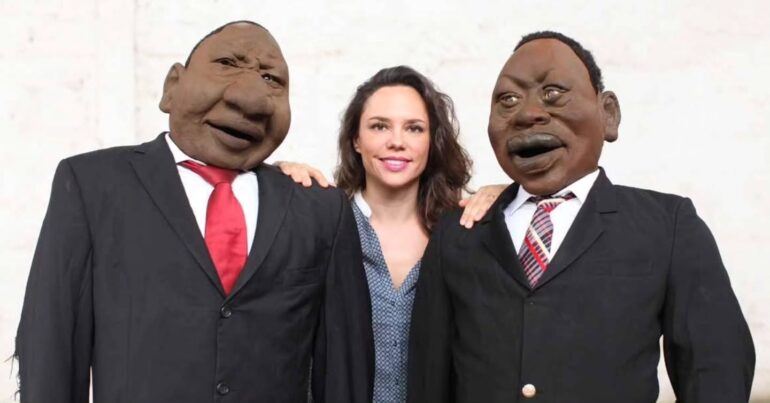
For over a decade, the XYZ Show carved out a singular place in Kenya’s cultural memory. Its latex puppets, built in the satirical tradition of shows like Spitting Image, gave the country a voice — and a laugh — at a moment when it badly needed both. But according to Mungai, the show that shaped a generation’s political humor was, by her own account, “doomed” as a business from day one.
In a recent reflection shared on Facebook, Mungai revisited the origins and economics of the show she built with puppeteer and artist Gado, offering a rare, candid look at what it actually took to keep a politically fearless production alive in one of Africa’s smaller media markets.
Born Out of Crisis, Not Commerce
The XYZ Show was never conceived as a commercial venture. Mungai explains that she and Gado created it in the aftermath of Kenya’s 2008 post-election violence, driven by a conviction that the country needed an outlet — ideally a humorous one — for the frustrations that had nearly torn it apart. The ambition was cultural and civic before it was ever financial.
Even so, the team wanted the show to sustain itself, and they spent years testing different models to make that possible.
Well-Funded, Well-Distributed — yet Still Unsustainable
By Kenyan production standards, the show was unusually well-resourced. Over five years, Mungai and her team raised upto Ksh 900,ooo,ooo from donors to finance XYZ and a handful of related projects. The show achieved remarkable reach: national television, radio, online platforms, and DVDs, with even the President referencing it publicly.
But Mungai is direct about the irony at the heart of that success: the very funding that made the show possible also masked the fact that its underlying economics never worked.
Piracy was a persistent issue, she notes — but she’s careful to point out that even flawless intellectual property enforcement would not have changed the fundamental arithmetic.
Where the Numbers Broke Down
Mungai identifies two structural problems that donor funding could paper over but never solve.
The first was a straightforward mismatch between cost and market size. Kenya’s advertising market is small, and broadcasters have limited budgets for content. XYZ’s license fee sat at Ksh 350,000 per episode, while production costs ran to Ksh 1.9M. A single latex puppet alone cost Ksh 900,000, took three weeks to build, and required three people to operate — two puppeteers and one voice talent. A large following on YouTube and Facebook offered little relief, since platform monetization wasn’t yet enabled during the show’s run.
The second problem was tied to the show’s very identity. Because XYZ openly satirized government figures, brands were reluctant to associate with it — sponsorship revenue remained at zero throughout its run. And because the content was news-driven and topical, the back catalog held little resale value; unlike non-news formats, which can license their libraries for years, XYZ’s episodes lost relevance almost as quickly as the news cycle that inspired them.
A Proud Legacy, and a New Chapter
Despite the financial reality, Mungai is unequivocal that producing XYZ remains one of the proudest achievements of her career and of her entire team’s. The experience, she says, taught her hard lessons about business and monetization within the creative industries — lessons she has since distilled into her new book, Creative Cash Flow, aimed at helping other creative entrepreneurs build more sustainable businesses.
Looking back on the show’s legacy, Mungai closed her reflection on a forward-looking note, expressing enthusiasm for what Kenya’s next generation of creatives will build.
What did the XYZ Show mean to you? Share your memories of the puppets, the punchlines, and the politics they skewered.

About Post Author