music_note


The Man Nobody Checks On.
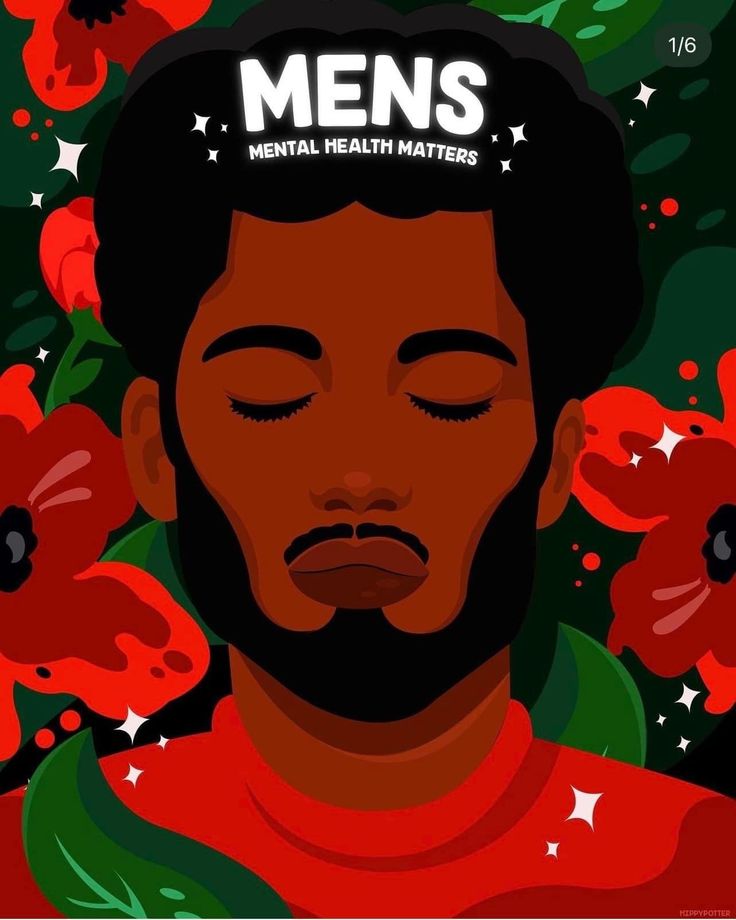
By Ronny Choge | 11TH JUNE, 2026.
Picture a 28-year-old man in Nairobi. He has a degree. He has hustle. He scrolls through job listings every morning over black tea because there’s nothing else in the kitchen shelves. His girlfriend earns more than he does. His mother calls asking when he will “settle down.” He hasn’t told anyone that for the past three months, he has felt a heaviness he cannot name. He won’t tell anyone. He is a man.
This is not a rare story. It is the story. Quietly multiplying across estates, boda boda stages, university hostels, and high-rise offices — a generation of Kenyan men navigating a world that has fundamentally shifted, yet still judging them by a rulebook written for a different era.
-
-
- 3:1 Men die by suicide compared to women globally — a ratio reflected in Kenya’s own patterns (KNBS)
- <20% Of those seeking mental health support in Kenya are men, despite equal or higher rates of distress
- 72% Of Kenyan men say they would not discuss emotional struggles with friends or family
-
A world that moved — without moving the goalposts
The modern Kenyan man was handed a contradiction at birth. Society evolved — rapidly, dramatically. Women entered boardrooms, universities, and parliament in greater numbers. The girl-child received focused investment: bursaries, mentorship programmes, campaigns. Rightly so. But as the landscape tilted, the emotional infrastructure for men remained frozen in 1970.
The same society that celebrated women’s rising expectations quietly maintained the same expectations of men: provide, protect, lead, endure. No one updated the script. The man who cannot put food on the table is still a failure. The man who weeps is still weak. The man who asks for help is still “not man enough.”
“You were raised to be a pillar. But nobody asks whether the pillar itself is cracking.”
This is not an argument against women’s empowerment — that project should and must continue. It is an argument for recognising that liberation cannot be selective. When we fail to liberate men from the prison of impossible expectations, we leave them to suffer in silence — and silence, in mental health, is where crises are born.
The economics of masculinity
Kenya’s economy has been brutal. Youth unemployment fluctuates between 67% (Federation of Kenya Employers). The gig economy — boda bodas, mjengo, online hustle, casual labour — has replaced stable employment for millions. Nevertheless the cultural scorecard of manhood is still tallied in shillings: Do you have a car? Have you built a home? Can you pay school fees?
In a country where a young man may be educated, able-bodied, willing — and still structurally locked out of opportunity — the internal reckoning is devastating. He does not perceive it as a systemic failure. He sees it as his failure. Personal. Shameful. Deserving of silence.
Urbanisation adds its own cruelty. The young man who arrives in Nairobi from Kisii, Kitale, or Marsabit carries his rural community’s full weight of expectation on a bus. He is supposed to send money home. He is supposed to succeed. The city greets him with rent, rejection letters, and loneliness — a particular loneliness, because men in cities are rarely taught to build emotional communities. Women find their people. Men find their hustle.
What urbanisation costs the Kenyan man:
Migration into cities severs men from traditional support networks — elders, community structures, agemates — without replacing them. The result is social isolation masked as independence. Many men in Nairobi, Mombasa, and Kisumu have reported that they have no one they can speak to honestly about their struggles — not a single person.
What happens when love breaks down?
Nowhere is the modern Kenyan man’s vulnerability more exposed — or more ignored — than in intimate relationships. Divorce rates are over the roof. Custody battles are fought in courts where the default assumption is that children belong with their mothers. Fathers are reduced to child support figures, visiting strangers, or absent symbols in their children’s lives — regardless of how desperately they want to be present.
The grief of losing access to one’s children is a specific, searing kind of pain. One that is least talked about. It is not met with the same cultural sympathy as other losses. A man who weeps over his children in a custody dispute is still expected to compose himself and sign papers. His brokenness is administrative.
Beyond custody — the simple act of heartbreak hits differently when you have been conditioned your entire life not to feel deeply, not to show, not to share. The emotions do not disappear. They go underground, where they calcify into something harder: anger, substance use, withdrawal, risk-taking behaviour. Kenya’s rising rates of alcohol dependency among men are not a mystery. They are the natural outcome of grief with no sanctioned exit.
The boy who never had a chance
To understand the man, we must first look at the boy. In many Kenyan homes and schools, boys are systematically undertaught emotional vocabulary. From the earliest age, tears are corrected, sensitivity is shamed, and stoicism is rewarded. Boys who struggle academically are less likely to receive targeted interventions than their female counterparts. Boys who act out are disciplined; rarely are they asked what is wrong.
The school system, for all its reforms, has been slow to address this. Social-emotional learning remains largely absent from curricula. Male teachers — who might model alternative masculinities — are dwindling in primary schools. And at home, in households with absent fathers (themselves products of the same system), boys learn masculinity by default: from peers, from social media, from the street.
What they learn is a performance. Toughness as costume. Bravado as language. Invulnerability as identity. And by the time they are 25, sitting in that flat in Nairobi with the black tea and the empty kitchen shelves, the costume has become the only skin they know how to wear.
↑42% Rise in reported male depression cases in urban Kenya over the past decade(CDC/WHO)
The support gap nobody wants to name
If a woman in Kenya’s social circles is struggling — with grief, depression, relationship pain — her community will likely activate. Friends will visit. Family will gather. Food will arrive. Prayer circles will convene. The scaffolding of social and emotional support for women, however imperfect, exists.
For men, the scaffolding is largely absent. Male friendships in Kenya are often structured around activity — football, drinking, work — rather than emotional disclosure. The idea of calling a male friend to say “I’m not okay” feels, for most Kenyan men, practically unimaginable. There is no script for it. There is no precedent.
Mental health services, too, are not designed with men in mind. Therapy is perceived as feminine, or as a luxury, or both. Therapists are few and expensive — and the few who practice in public-health settings are overwhelmed. Men who do manage to seek help often encounter systems that are not culturally calibrated to their specific forms of distress.
The asking problem:
Research consistently shows that men are less likely to self-refer for mental health support — not because they suffer less, but because help-seeking contradicts the masculine identity they have been socialised to inhabit. The solution is not to tell men to “just ask for help.” It is to change the conditions that make asking feel like self-destruction.
What a different Kenya could look like
None of this is inevitable. The architecture of men’s suffering was built by culture, and culture can be rebuilt. It begins with a simple but radical act: taking male pain seriously. Not as weakness. Not as entertainment. Not as background noise to more visible crises. But as a genuine, urgent, and solvable human problem.
It means investing in male-specific mental health outreach — in barbershops, in sports clubs, at roadside stages, in the matatu culture, in the spaces men actually inhabit. It means training community health volunteers to recognise male depression, which often presents differently from the clinical picture: as irritability, withdrawal, substance use, recklessness. It means building school programmes that teach boys, from Grade One, that their inner life is as real and important as their report card. It means reimagining schools as centres of wholesome development, not merely factories of academic achievement.
It means — and this is perhaps the hardest part — asking Kenyan society to hold two truths at once: that women’s rights and opportunities must continue to expand, and that men’s emotional lives cannot continue to be treated as afterthoughts. These truths are not in competition. They are complementary. A generation of emotionally healthy men is a generation of better fathers, better partners, better citizens.
The man nobody checks on is everywhere. He is your brother, your son, your colleague, your boda boda rider, your neighbour on the third floor. He has learned to say “niko sawa” even when he is not. He has learned to disappear into himself and call it strength. It is time we learned to ask better questions — and to wait for the honest answer.

About Post Author