music_note


When Schools Burn and Silence Grows Loud: Kenya’s Recurring Student Unrest and the Search for Lasting Solutions
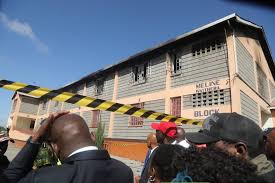
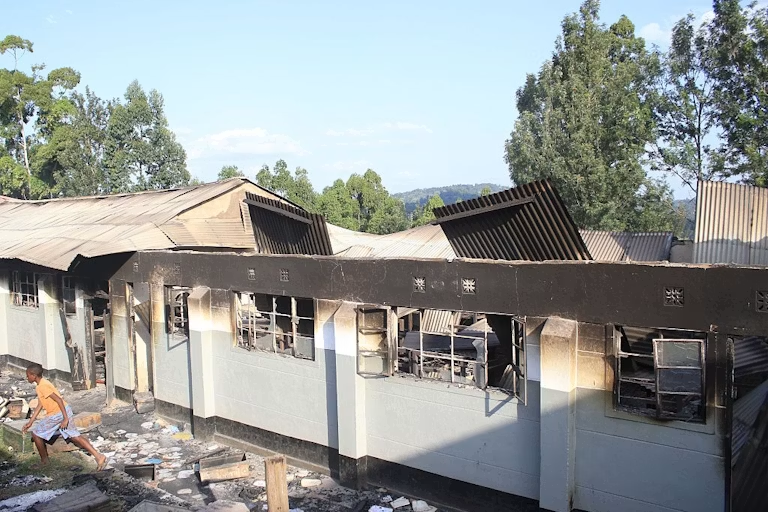
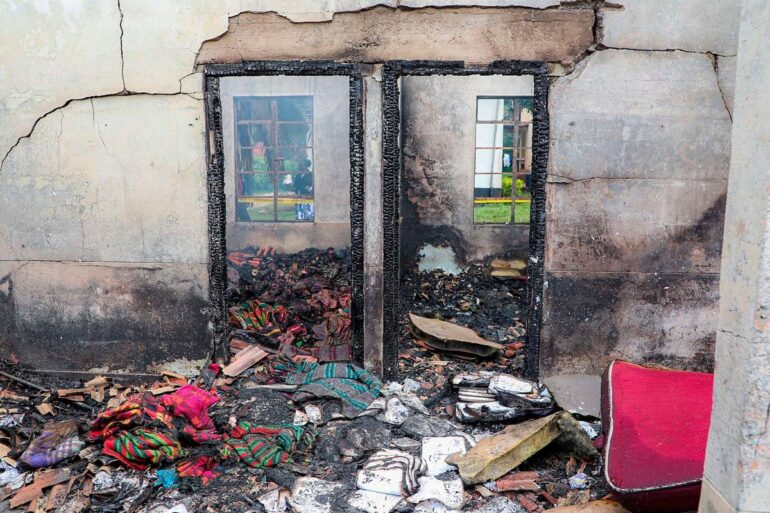 Kenya’s education sector is once again under the spotlight following the tragic fire at Utumishi Girls Academy in Gilgil. The incident, which claimed lives and left many injured, has not only shocked the nation but also triggered a wave of anxiety, precautionary closures, and disturbances in secondary schools across the country. In the days after the Utumishi tragedy, several institutions reported unrest, threats of arson, or took the difficult decision to send students home early.
Affected schools include Naivasha Girls High School, Loreto High School Limuru, Lenana School, Mang’u High School, Alliance High School, Mukumu Girls High School, Saseta Girls Secondary School, Upper Hill Secondary School, among others. While responses have varied, the message is clear: Kenya’s boarding school system remains fragile and prone to outbreaks of student unrest, especially in times of national trauma. This is not an isolated crisis — it is part of a deeply rooted, recurring pattern.
The Historical Pattern:
Decades of Cyclical Unrest School disturbances in Kenya are far from new. They form a familiar cycle that repeats every few years, often with compounded consequences.
- 1990s: Frequent strikes driven by rigid disciplinary systems and limited student voice.
- 2001: The Kyanguli Secondary School fire tragedy, which killed 67 students and exposed critical failures in safety, supervision, and grievance handling.
- 2008: Widespread strikes and property destruction linked to academic pressure and poor governance.
- 2016: A massive wave of fires and strikes that affected over 100 schools, highlighting the growing role of social media in amplifying unrest.
These episodes reveal a consistent truth: Kenya does not face one-off incidents but systemic cycles of institutional strain that flare up under pressure. What Sparked the Latest Wave? The Utumishi Girls incident served as a painful catalyst. In its aftermath, anxiety spread rapidly through rumours, fear, and precautionary measures by school administrations. What lies beneath, however, are long-standing issues that were already simmering:
- Poor communication between students and school leadership
- Unresolved grievances over welfare
- Intense academic pressure
- Mental health challenges
- The stresses inherent in boarding school life
Root Causes: A Data-Point Analysis
School unrest in Kenya stems from multiple interconnected factors:
- The Crisis of Voice
At the heart of many school conflicts lies a simple but powerful issue: students often feel unheard.
While student leadership structures exist in most schools, their influence is frequently limited to ceremonial roles. Decisions about discipline, welfare, and daily life are typically top-down.
In such environments, frustration does not disappear—it accumulates.
And when communication channels fail to provide release valves, tension often finds alternative expression.
- The Weight of Academic Pressure
Kenya’s education system remains heavily exam-oriented in culture, even as reforms like CBC attempt to broaden learning outcomes.
For many students, success is still defined narrowly by grades and rankings. This creates a high-pressure environment where failure feels personal and final.
In sociological terms, this produces what is often described as “performance anxiety societies”—systems where identity is closely tied to measurable achievement.
- Boarding School Realities
Boarding schools are unique social worlds. They are structured, isolated, and highly regulated environments where students spend months away from family support systems.
While this structure can foster discipline and academic focus, it can also intensify emotional strain. Small grievances—about food, routines, discipline, or privacy—can quickly escalate when students feel they have limited autonomy.
- The Digital Amplification Effect
Unlike earlier decades, today’s students operate in a hyper-connected digital environment.
Information—whether accurate or distorted—travels quickly across schools and regions. Social media platforms amplify emotions, spread narratives, and sometimes normalize disruptive responses as forms of collective expression.
A local incident can become a national conversation within hours.
- Generational Expectations and Institutional Lag
Modern students are growing up in a world that values dialogue, participation, and expression. Yet many school systems still operate on rigid hierarchical models inherited from earlier decades.
This mismatch creates friction—not necessarily rebellion, but tension between expectation and experience.
- The CBC Transition Pressure: A Contributing Factor?
The shift from the 8-4-4 system to the Competency-Based Curriculum has introduced both promise and uncertainty.
While CBC aims to reduce exam-centric learning and promote skills-based development, its implementation phase has been marked by adjustment challenges—ranging from teacher preparedness to institutional restructuring.
Schools have had to adapt to:
- New assessment systems
- Additional infrastructure needs
- Teacher retraining
- New learning pathways
In and of itself, CBC is unlikely to be a direct cause of unrest. However, it operates as a stress multiplier in an already pressured environment, adding layers of uncertainty during a period of institutional transition.
7. Peer Influence and Collective Behaviour
Human beings are social creatures, and adolescents are particularly influenced by peer groups. Sociological studies show that individuals may engage in actions as part of a group that they would never consider while alone. In moments of tension, group dynamics can transform isolated frustrations into collective action.
- The Mental Health Gap in Schools
At the heart of many student struggles is a growing but often overlooked issue: mental health challenges are rising among adolescents, yet support systems remain insufficient. Increasing cases of anxiety and depression among learners are being compounded by family instability and broader socio-economic pressures. Many students are carrying emotional burdens that are rarely visible within the school environment.
While most schools have guidance and counselling departments, they are often understaffed, under-resourced, or limited in reach. In addition, stigma surrounding mental health continues to discourage many learners from seeking help or openly expressing distress. In such conditions, emotional strain does not simply disappear. It remains unaddressed, gradually intensifying over time.
The Deeper Issue: Institutions Under Strain
When all these factors converge—academic pressure, limited student voice, boarding school constraints, generational shifts, Emotional neglect, Communication failure and institutional transitions—the result is not a single cause but the interaction of all these forces.
School unrest, in this sense, is not an isolated behavioral problem. It is a systems issue expressed through behaviour.
What Must Change: A Practical Path Forward
- Strengthening Student Voice Through Structured Participation
Schools must institutionalize meaningful student participation beyond ceremonial leadership roles. Student councils should function as recognized consultative bodies with clear pathways for grievance resolution, ensuring concerns are addressed before they escalate
- Expanding Mental Health Infrastructure in Schools
Mental health must be treated as a core pillar of education. This includes increasing trained counsellors, normalizing psychological support, integrating peer-support systems, and conducting routine wellness assessments. Emotional well-being should be regarded as foundational to academic success.
- Rebalancing Discipline with Dialogue
Discipline remains essential in any learning environment, but it must evolve from purely punitive frameworks to restorative approaches. Schools should prioritize structured dialogue, mediation, and fair hearing systems that reinforce authority while building trust.
- Improving Student Welfare and Living Conditions
Basic welfare is not optional—it is preventive infrastructure. Investment is needed in dormitory capacity, food quality, sanitation systems, water access, and recreational spaces. Stable living conditions reduce friction and improve institutional trust.
- Developing Early Warning and Response Systems
Schools require structured mechanisms to detect early signs of tension, including grievance tracking systems, counselling reports, behavioral trend monitoring, and student feedback loops. Early intervention is more effective than post-crisis reaction.
- Supporting Teachers as Frontline Stabilizers
Teachers operate at the center of student interaction and must be adequately supported. This includes reducing administrative overload, improving teacher-to-student ratios, and providing mental health and professional development support.
- Strengthening School Safety and Emergency Preparedness
All institutions must prioritize fire safety systems, emergency drills, dormitory inspections, and risk audits. Safety infrastructure is a non-negotiable safeguard against preventable tragedies.
- Building a National Student Well-being Framework
Kenya requires a coordinated national strategy that tracks student welfare indicators across schools, standardizes counselling services, and provides rapid response mechanisms for institutions showing signs of distress.
The Force of Reason
Prof. Henry Kiplagat ,the current Vice Chancellor of Kabarak University, once gave a remark that has stayed with me ever since. He said, “We must not attempt to reason with force. Instead, we must learn to apply the force of reason.” This was during his tenure as chairman of the Board of Management at Baringo High school, where I was a student back in 2016. At the time, a wave akin to this one had blanketed several schools across the country. This principle continues to remain profoundly relevant.
Schools cannot punish or suppress their way to stability. Lasting solutions must address the human and systemic dimensions — trust, voice, welfare, and psycho-emotional safety. Kenya stands at important crossroads. The recurring closures, disruptions, and tragedies are painful reminders that schools are not only just examination centres but are also living social ecosystems. When these ecosystems are starved of dialogue and care, they become volatile.
The question is no longer whether reform is necessary. It is whether the country will commit to reforms that are deep, sustained, and human-centred enough to finally break the cycle. The cost of continued inaction is already being paid — in lost learning time, damaged infrastructure, trauma, and lives that should never have been lost.

About Post Author