music_note


Kenya’s Historic Impeachment: What the Court’s Ruling on Riggy G Really Means
By Ronny | June 9, 2026.
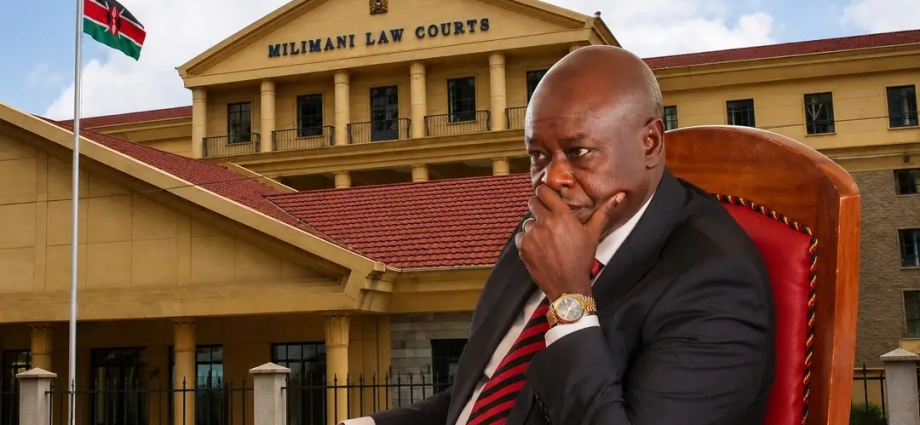
On June 8, 2026, a three-judge High Court bench delivered one of the most consequential rulings in Kenya’s post-independence constitutional history. The case centred on Rigathi Gachagua — popularly known as Riggy G — the man who, just over a year ago, became the first Deputy President to be impeached and removed from office in Kenya’s history. The ruling has sparked fierce debate across the country, and for good reason. It is, at once, a legal defeat, a moral vindication, and a political signal with enormous implications for 2027.
Let’s break it all down.
Who Is Rigathi Gachagua?
Before we get into the court drama, it helps to understand the man at the centre of it all. Rigathi Gachagua — affectionately or derisively called “Riggy G” depending on who you ask — served as Kenya’s Deputy President from September 2022, having been elected on the same ticket as President William Ruto. A seasoned politician from Nyeri County and a loud voice for the Mt. Kenya region, Gachagua was never far from controversy. His blunt, unfiltered political style earned him a devoted following and an equally fierce set of critics.
By mid-2024, however, his relationship with President Ruto had soured beyond repair. The political friction became a constitutional crisis.
The Impeachment: A Sequence of Historic Events
On October 8, 2024, the National Assembly voted to impeach Gachagua on 11 charges, a list that read like a catalogue of political grievances: ethnic division, gross misconduct, violating his oath of office, and — most pointedly — undermining the President. It was political theatre at its most dramatic, and Kenya watched with a mixture of astonishment and fascination.
Nine days later, on October 17, 2024, the Senate upheld five of the eleven charges, sealing Gachagua’s fate. He was removed from office — a moment that had never happened before in Kenya’s constitutional history. Prof. Kithure Kindiki, the then Interior Cabinet Secretary, was swiftly appointed as his replacement.
The constitutional machinery had spoken. But Gachagua and his allies refused to accept the verdict.
The Court Challenge: Fighting Back
Almost immediately, Gachagua and petitioners filed cases at the High Court, arguing that the impeachment process had been deeply flawed. Their core arguments were compelling:
- The process was unconstitutional in its design and execution
- Gachagua was denied a fair hearing — specifically, the Senate refused to grant an adjournment when he was hospitalised with chest pains and physically unable to present his defence
- Various fundamental rights had been violated in the rush to remove him
The consolidated petitions were heard by a three-judge bench comprising Justices Eric Ogola, Anthony Mrima, and Freda Mugambi — a bench that would spend months carefully weighing one of the most politically charged cases the Kenyan judiciary has faced in recent times.
The Ruling: A Split Verdict That Satisfies No One Fully
The judgment delivered on June 8, 2026, is best understood not as a simple win or loss — but as a nuanced, dual-natured ruling that will be debated in courtrooms, boardrooms, and barbershops for years to come.
The Bad News for Gachagua
The court dismissed the petition to nullify the Senate’s resolution. The impeachment stands. Riggy G remains out of office, and Prof. Kithure Kindiki’s appointment as Deputy President is confirmed as valid and lawful. For those who hoped the courts would reverse the clock, that door has been firmly closed — at least at the High Court level.
The ruling also confirms that Gachagua is barred from holding certain public offices as a direct consequence of the upheld impeachment. As 2027 approaches, this is not a trivial matter.
The Significant Win
Here is where the ruling takes a remarkable turn. The court found that the Senate violated Gachagua’s constitutional right to a fair hearing. The specific issue: when Gachagua was hospitalised with chest pains during the Senate proceedings, his team requested an adjournment so he could be present and fully defend himself. The Senate refused.
The judges found this refusal to be a clear breach of the Constitution’s fair hearing guarantees.
The consequence? The court ordered the Senate to pay Ksh 50 million in constitutional damages to Gachagua. The bench framed this award carefully — not as compensation for loss of office, but as a measure to vindicate the Constitution, restore his dignity, and critically, to deter future violations by those wielding impeachment powers.
It is a message from the judiciary to Parliament: process matters, rights matter, and the Constitution is not a mere inconvenience to be swept aside in the heat of political moments.
What the Court Did Not Decide
The judges declined to make orders on Gachagua’s pension and other emoluments, directing that those issues be pursued through other appropriate forums. A reminder that not every grievance finds its resolution in a single case.
The Bigger Constitutional Conversation
Perhaps the most forward-looking aspect of the ruling is the court’s emphasis on the need for a clear legal framework governing the impeachment of a Deputy President under Article 150 of the Constitution. The judges essentially flagged that Kenya’s constitutional architecture has gaps — the process used to remove Gachagua exposed procedural ambiguities that Parliament must urgently address.
This is a call to legislators to do their jobs: craft clear, fair, and robust rules so that Kenya never again finds itself in a situation where a Deputy President can be removed in a process later found to have violated their fundamental rights.
The Political Fallout: What Happens Next?
Gachagua was not in court for the ruling — his absence itself a statement. He has since hinted at appealing to higher courts, meaning the legal saga may be far from over. A Court of Appeal challenge could keep this story alive well into the 2027 election cycle.
Politically, the ruling is a gift of sorts to Gachagua’s narrative. He can now credibly claim — and will — that the State violated his constitutional rights to push him out. The Ksh 50 million damages award, while not restoring his office, gives him a moral platform. In the court of public opinion, especially in the Mt. Kenya region where his support base remains strong, this matters enormously.
The implications for 2027 are significant. Gachagua remains a force. Barred from certain offices, yes — but Kenya’s political landscape has a way of rewarding those who can frame themselves as victims of an unjust system. Watch this space.
For President Ruto and his allies, the ruling is a partial relief — the removal stands, Kindiki stays. But the Ksh 50 million damages award and the fair hearing finding are an uncomfortable blemish. It validates, at least partially, the narrative that the impeachment was rushed, politically motivated, and procedurally compromised.
Final Thoughts: A Ruling for the History Books
Whatever your politics, the Gachagua impeachment ruling is a landmark moment in Kenya’s constitutional journey. It demonstrates that the judiciary is willing to hold Parliament accountable — even while respecting the political decisions Parliament makes. It draws a line in the sand: you can remove a Deputy President, but you must do it right.
The court has spoken at the High Court level. Whether the Court of Appeal or Supreme Court will have the final say remains to be seen.
One thing is certain: the story of Riggy G is far from over.

About Post Author