music_note


KEPRO Convenes Media to Strengthen Understanding of EPR Enforcement in Kenya


Nairobi, Kenya – The Kenya Extended Producer Responsibility Organization (KEPRO) today convened a high-level media breakfast at the Sarova Stanley Hotel under the theme: “EPR Enforcement in Kenya: The Role of Media in Driving Responsible Business and Consumer Accountability.”
The engagement brought together key stakeholders from government, industry, and the media to enhance understanding of Extended Producer Responsibility (EPR) enforcement and to underscore the critical role of the media in advancing public awareness, accountability, and responsible environmental practices.
The forum sought to equip journalists with a deeper understanding of the EPR framework, its enforcement implications for businesses and consumers, and the importance of accurate, consistent, and impactful reporting in shaping Kenya’s transition towards a circular economy.

Advancing EPR in Kenya
Delivering the keynote address, KEPRO Chief Executive Officer, Mr. James Odongo, reaffirmed the organization’s commitment to supporting producers in meeting their regulatory obligations while strengthening Kenya’s waste management ecosystem.
He noted that since its establishment in 2021, KEPRO has grown to become Kenya’s largest Producer Responsibility Organization (PRO) in the non-hazardous packaging sector, currently supporting over 1,400 member companies. The organization has established a nationwide presence across all 47 counties, conducted more than 700 awareness forums, and mobilized over KES 300 million to support recycling and recovery initiatives, contributing significantly to the diversion of packaging waste from landfills.
Mr. Odongo emphasized that with the gazettement of the Extended Producer Responsibility Regulations, 2024, Kenya has now transitioned into full enforcement of EPR compliance under the oversight of the National Environment Management Authority (NEMA).

He further highlighted that compliance now requires producers to register with NEMA, obtain the necessary licenses, join a Producer Responsibility Organization, and declare the volumes of packaging introduced into the market through Monthly Volume Declarations (MVDs). These declarations inform EPR fees, which finance the collection, recycling, and recovery of post-consumer waste. Noncompliance may result in regulatory sanctions and potential business disruptions.
“EPR should not be viewed solely as a regulatory obligation, but as an opportunity to drive innovation, resource efficiency, and long-term sustainability,” he noted. “The media plays a pivotal role in shaping this narrative and ensuring that both businesses and consumers are informed and accountable.”
Multi-Stakeholder Dialogue on Media and Accountability
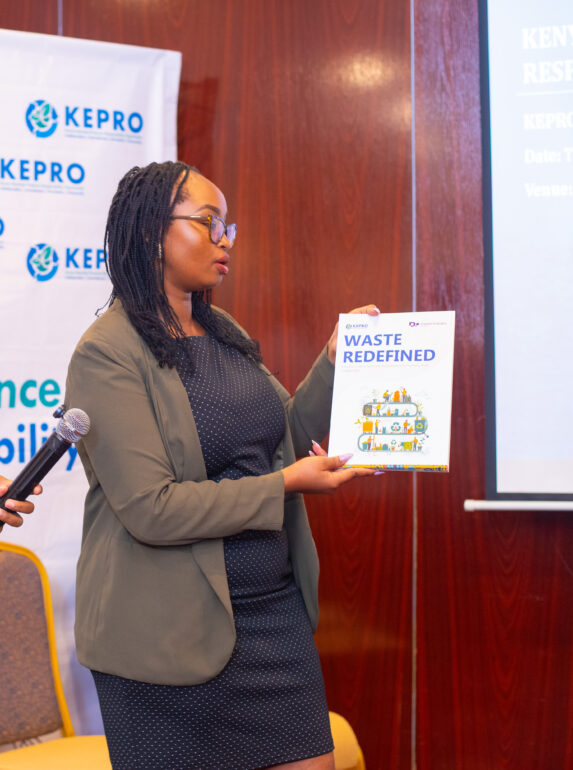
The event featured a high-level panel discussion moderated by Ms. Winnie Chepkorir, Corporate Communications Officer at KEPRO, with contributions from Eng. Bonface Mamboleo, Principal Environment Officer at the National Environment Management Authority (NEMA), Ms. Queenter Mbori, Executive Director of the Association of Media Women in Kenya (AMWIK), and Ms. Georgina Wachuka, Policy and Research Advocacy Lead at the Kenya Association of Manufacturers (KAM). The discussion explored the critical intersection between media, policy, and industry, underscoring the role of responsible journalism in driving compliance, promoting transparency, and influencing consumer behaviour. Panelists emphasized the need for sustained environmental reporting, improved access to accurate information, and stronger collaboration between media practitioners and stakeholders within the EPR ecosystem.
Key Highlights from the Panel Discussion

Eng. Bonface Mamboleo (NEMA) highlighted that many instances of non-compliance stem not from resistance, but from limited awareness and understanding of EPR requirements. He underscored the media’s role in demystifying compliance obligations and correcting prevailing misconceptions particularly the notion that EPR is a tax. He clarified that EPR is a responsibility framework that requires producers to take accountability for their products beyond the consumer stage, ensuring proper management of post-consumer waste.
Ms. Queenter Mbori (AMWIK) emphasized that the media serves as a reflection of society and holds a critical responsibility in shaping public discourse. She called for a shift towards sustained, solutions-driven storytelling on environmental issues, noting that reporting should go beyond event-based coverage and trending topics. She further highlighted the importance of simplifying complex concepts such as EPR to make them accessible to all audiences, while maintaining accuracy and balance. She encouraged stronger collaboration between institutions and media practitioners to drive impactful and continuous public engagement.
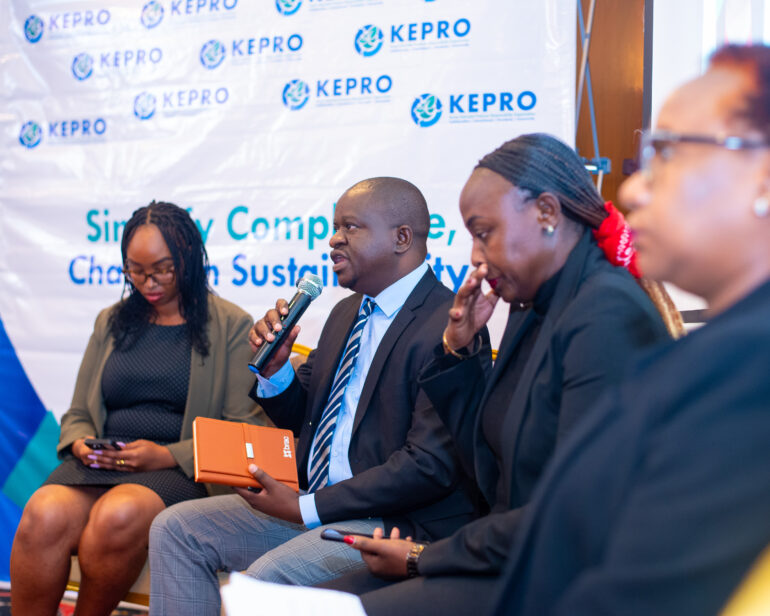
Ms. Georgina Wachuka (KAM) underscored the importance of a collaborative and deliberate approach in engaging stakeholders on EPR. She noted that the manufacturing sector is increasingly embracing circular economy principles, with innovations such as refill systems and sustainable packaging redesign gaining traction. While acknowledging progress, she also highlighted challenges related to policy clarity and implementation, particularly around classification frameworks. She emphasized the need for continued stakeholder engagement, clear guidelines, and ongoing capacity-building to support industry compliance and unlock opportunities within the circular economy.
Commitment to Responsible Reporting
In a significant outcome of the forum, participating journalists committed to advancing responsible and informed reporting on EPR and broader sustainability issues. This includes amplifying public awareness, promoting proper waste management practices, and supporting accountability across the value chain.
The session concluded with a networking engagement, reinforcing the importance of sustained collaboration between the media and stakeholders in advancing Kenya’s circular economy agenda.
About KEPRO
The Kenya Extended Producer Responsibility Organization (KEPRO) is a Producer Responsibility Organization established to support producers in fulfilling their obligations under Kenya’s Extended Producer Responsibility (EPR) framework. The organization was founded in 2021 as a voluntary compliance scheme, building on industry momentum that followed Kenya’s landmark Kenya Single-Use Plastic Bag Ban 2017, which catalyzed greater private sector commitment to responsible waste management and sustainable packaging practices.
Since its establishment, KEPRO has grown to represent over 1,400 members across manufacturing, retail, and other brands within the non-hazardous packaging value chain.
KEPRO works closely with businesses, government institutions, waste value chain actors, and other stakeholders to facilitate the responsible management of post-consumer waste, particularly packaging materials, in line with national environmental regulations. Through coordinated collection, recycling, and recovery systems, KEPRO has facilitated the offtake of more than 100,000 metric tonnes of packaging waste from landfills, while injecting over KES 300 million into the recycling ecosystem since 2021.
Beyond compliance support, KEPRO plays a key role in strengthening waste management systems, promoting responsible production and consumption, and advancing innovation across the recycling value chain. By bringing together producers and partners across the ecosystem, the organization contributes to reducing environmental pollution, increasing resource recovery, and accelerating Kenya’s transition toward a circular economy

About Post Author